

Polus
All Use Cases

Military & Defense Use Case

First the Picture. Then the Target.

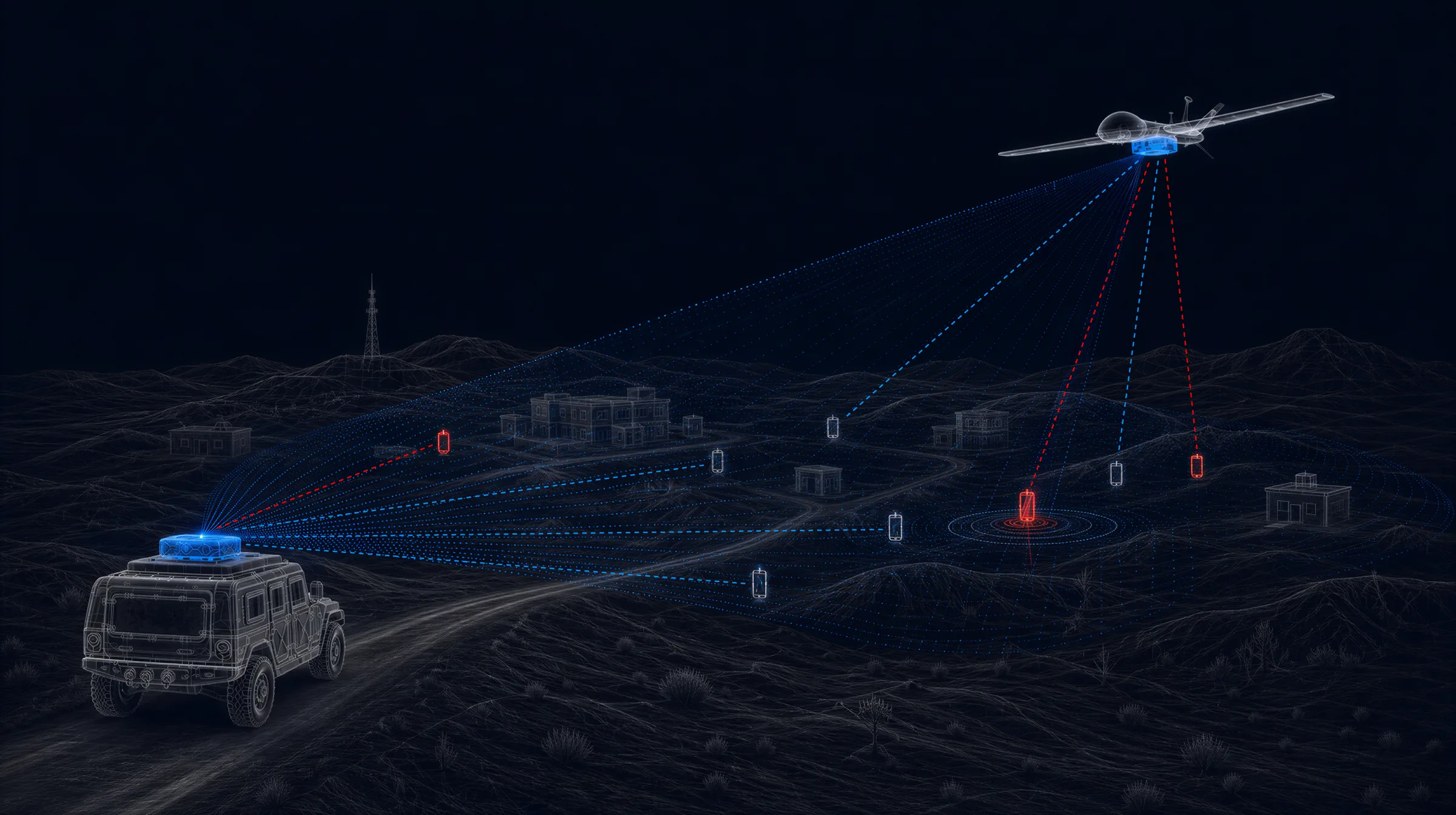
Vehicle and airborne sensors build one picture of the signal environment across the area of operations, and resolve a meter-class 3-D fix on any emitting target in it.

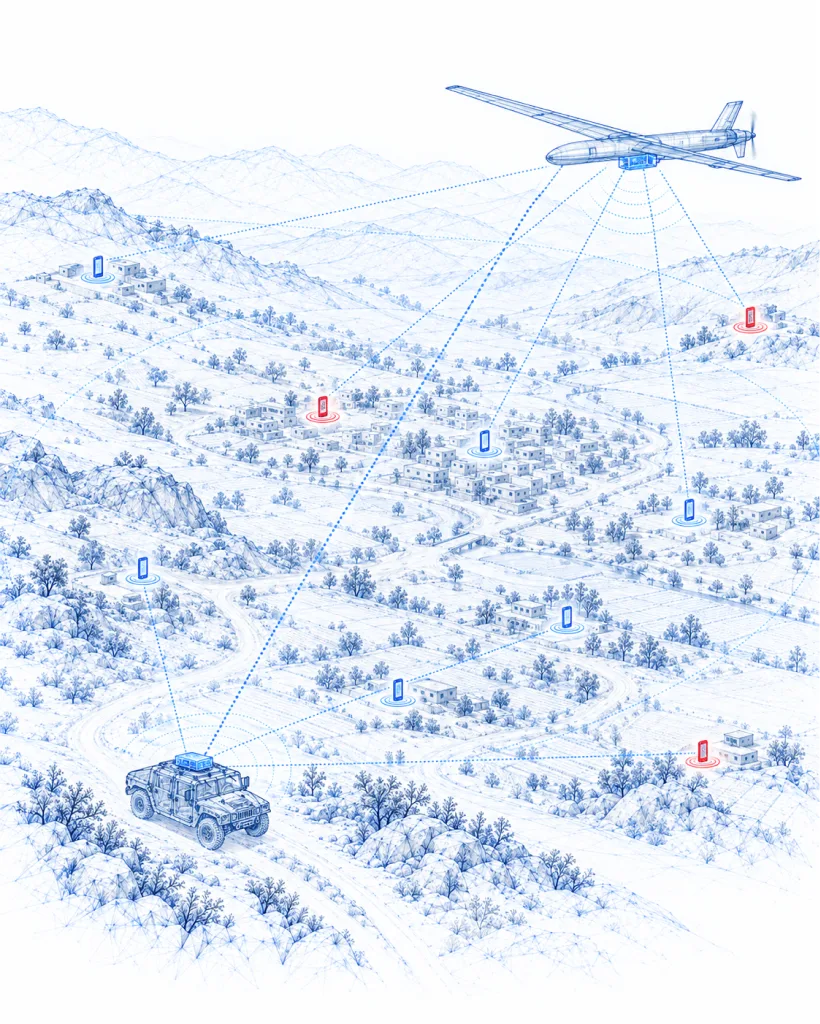
An armored vehicle with a Polus sensor on its roof and a UAV overhead, both reading emitting phones across open terrain; three are flagged red and one is ringed as the selected target.
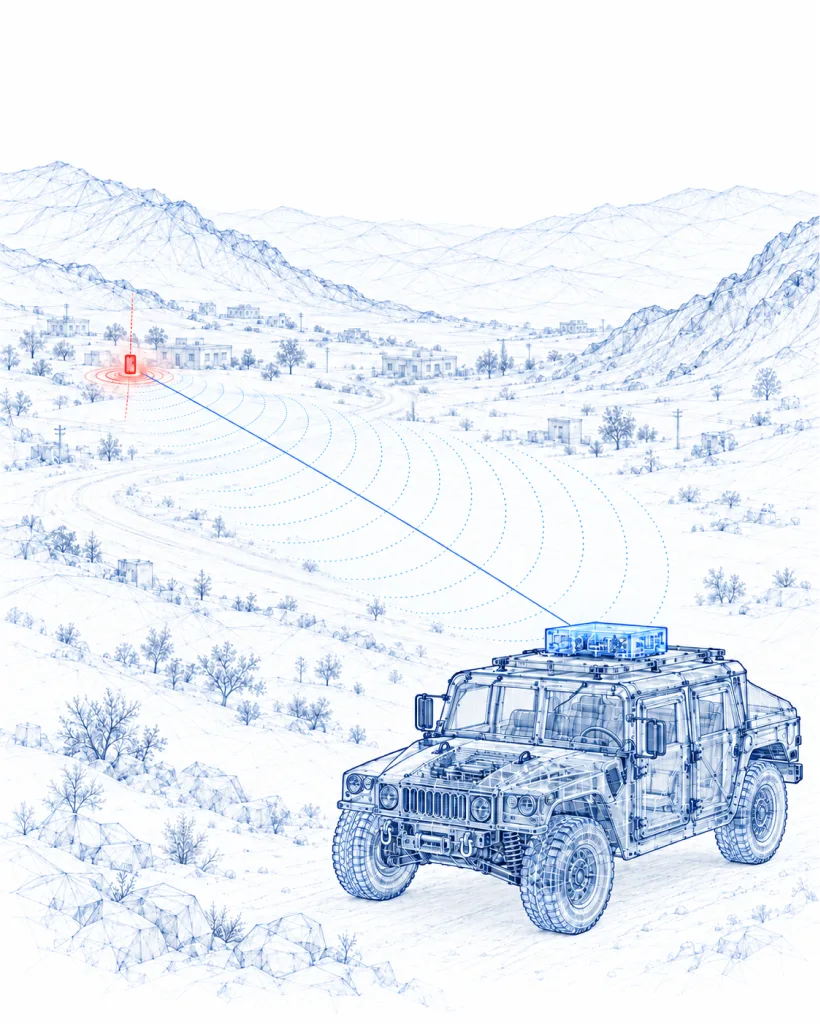
  1. 01: Maneuvering Force

    The force moves through its area of operations and detects active emitters as it goes.

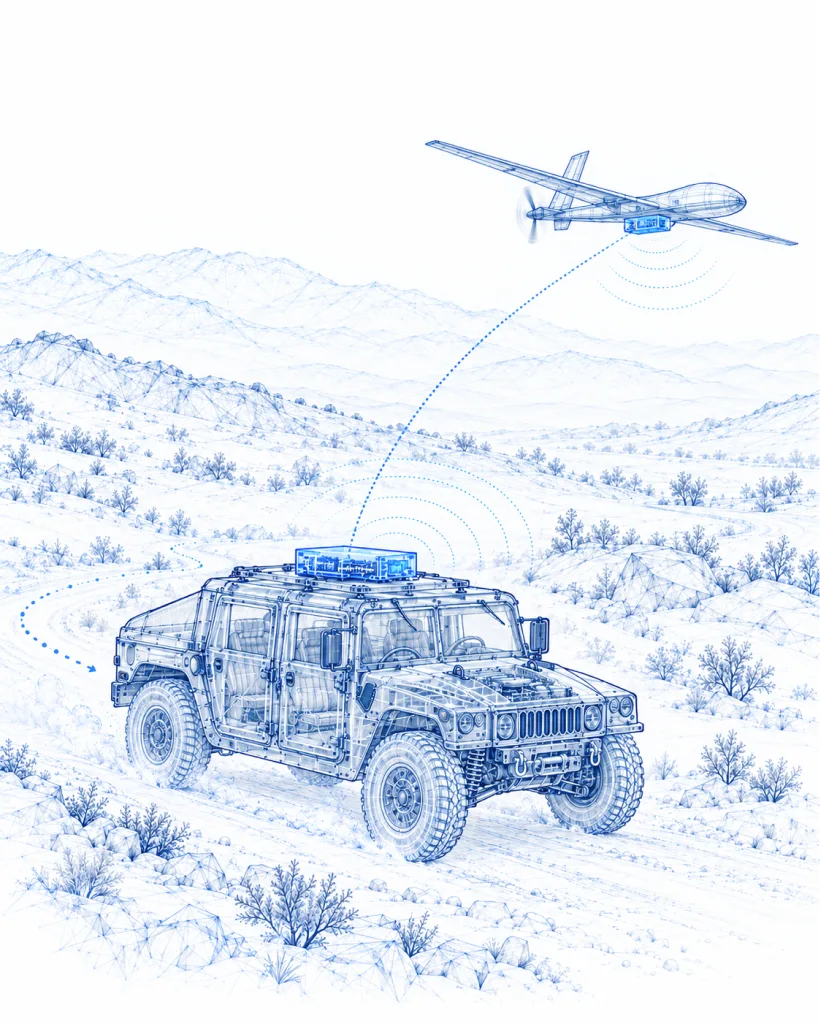
  2. 02: Wide-Area Sweep

    The UAV identifies emitters across the whole area in a single overflight.

  3. 03: One Picture

    Every emitter in range is separated and held in one live picture, whether there is one or hundreds.

Conventional collection stops where the fixed sites stop, and the sensors that reach further return tracks rather than identities. Something is moving, but not who it is, how many there are, or which one matters. The emitters themselves answer that, and they are the layer most forces are not collecting.

  • Localizes From a Single Sensor

  • Moves With the Team

  • Builds the Whole Picture

The Engagement Cycle


Stage One: The Full Picture

  1. 01Collect

    Vehicle-mounted and airborne sensors passively collect RF metadata across the area of operations, on the move and without announcing themselves.

  2. 02Separate

    Hundreds of emitters per pass are detected and separated from one another, not counted as noise.

  3. 03Build

    Everything lands on one console as a single live picture of emitter activity in the area.

Stage Two: Targeting

  1. 01Select

    The operator picks one emitting target out of the picture. Nothing is acted on that has not been selected.

  2. 02Cross-Cue

    Airborne findings hand off to the ground node, which closes the distance on the selected emitting target.

  3. 03Localize

    A meter-class 3-D fix from a single sensor, updated as the emitting target moves.

Scale

  • A Single Emitting Target

    Both layers converge on one emitting target of interest and track and fix it as it moves.

  • A Dense Environment

    Hundreds of active emitters across an area are detected, separated, and localized individually.

  • No Reconfiguration

    The same vehicle, the same airborne layer, the same operator. Nothing is swapped out between the two.

Ready to Extend Your Operational Reach?

Schedule a call and we'll walk through the fit for your area of operations.